

St Canice’s Cathedral has launched its new accessible audio guides, marking an important step toward enhancing the visitor experience and inclusion at one of Kilkenny’s best-known landmarks.
The project was funded by the Heritage Council of Ireland under its Community Heritage Grant Scheme (2025) to help the general public engage more meaningfully with heritage sites.
The newly developed guides were carefully designed to improve accessibility and ensure a richer experience for all visitors.
Descriptive Audio, providing detailed narration to support visitors who are blind or visually impaired, allows them to move freely around the Cathedral and gain a full understanding of its features. Irish Sign Language (ISL) interpretation was introduced to improve the experience for members of the Deaf community visiting St Canice’s.
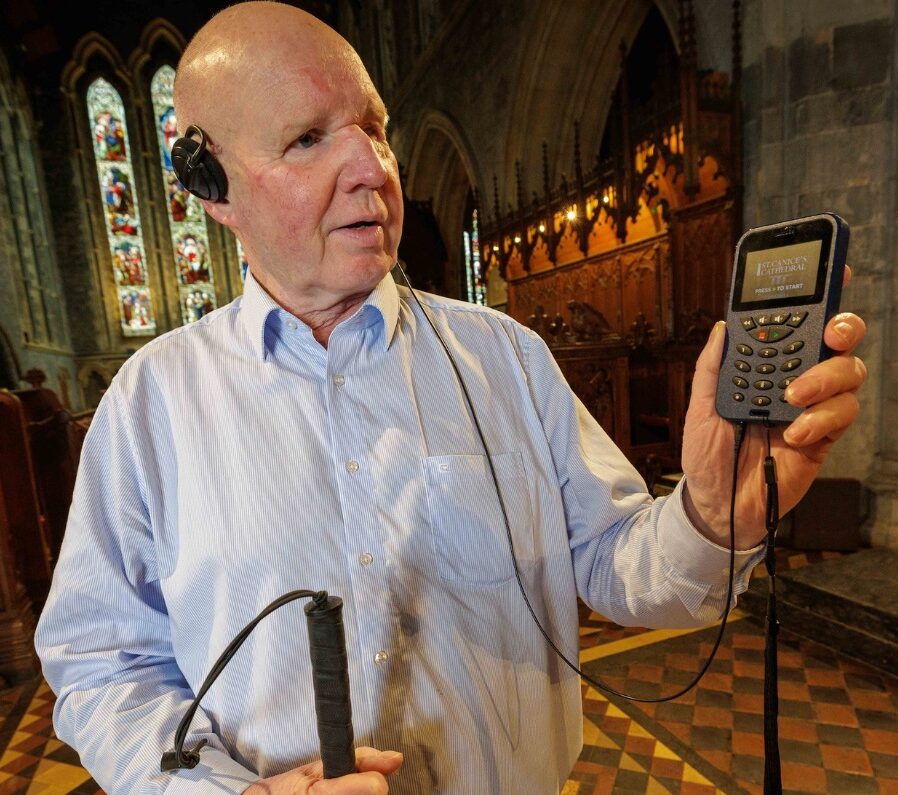
Well-known local figure Tom Kennedy was Guest of Honour at the launch and was the first person to test the new accessible audio guides at St Canice’s Cathedral.
“I was really delighted to be asked to bring the new audio guides on their maiden voyage,” said Tom, a well-known voice at the other end of the phone to anyone who calls Kilkenny County Hall.
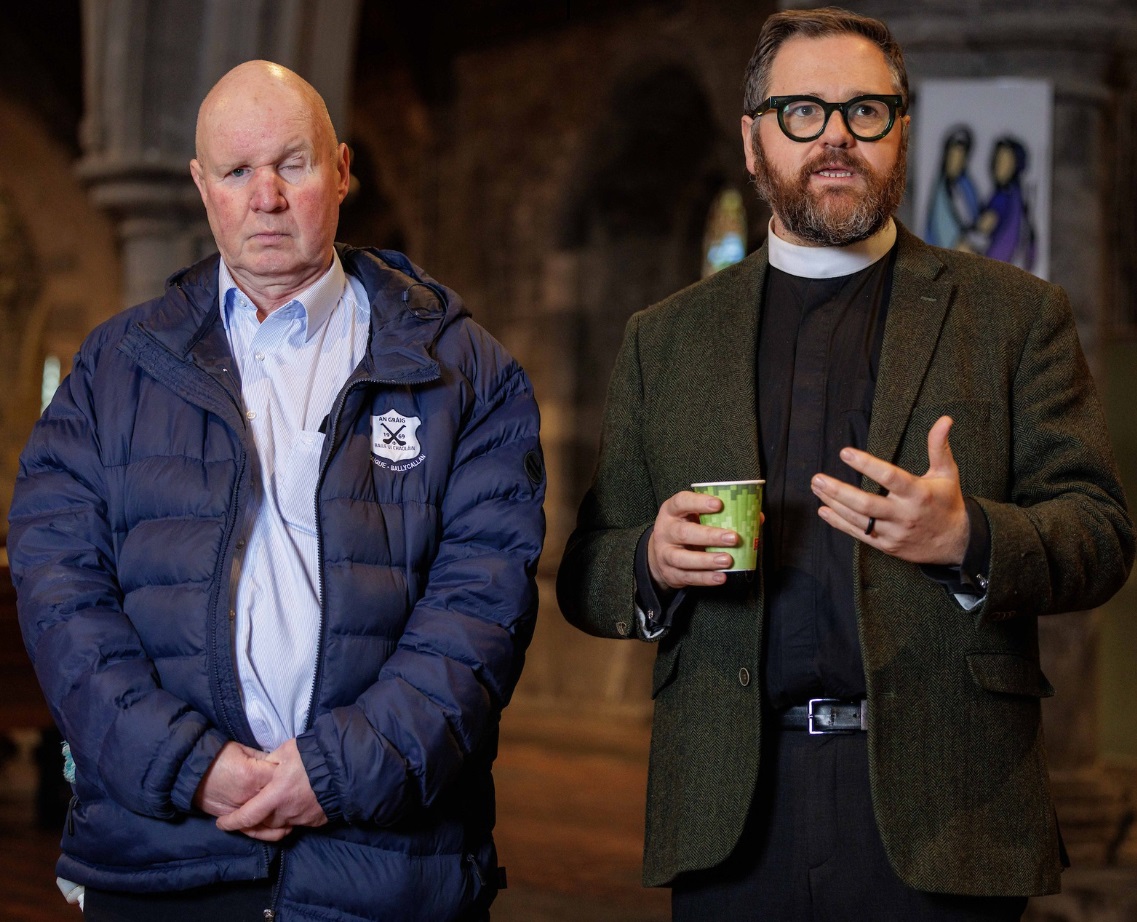
“It’s quite simple to use; it does what it says on the tin. The little apparatus itself is very easy for me to use: I can find the fast-forward and rewind buttons, and all the information is there. Even at the start, when you press play, it tells you to turn around, you have your back to the east window, and it guides you along with the details as you go.
“For someone with no eyesight, like me, or with limited eyesight, being able to navigate here is brilliant for people. As Dean Stephen (Farrell) said, it’s not just visually impaired people; anybody could really benefit from coming in and using the audio headsets. I think this is a brilliant step forward for St Canice’s Cathedral. I’m really positive about it, and I’d recommend it to anybody visiting.”
“When people come into St Canice’s, they walk down the ramp, turn the corner, and what is before them is a beautiful thing,” said Stephen Farrell, the Dean of Ossory.
“It occurred to us that not everyone experiences this building in the same way, and that we had not done enough to address inclusivity and accessibility. Doing what we could, and using the technology that is out there, to ensure that as many people as possible get the fullest and best experience of the Cathedral.”
He added: “We are very fortunate here that we have good friends and supporters in the Heritage Council who, a few years ago, were generous in their support of the first audio guides. That was us dipping our toe in the water of trying to find a new way to explore and explain what people were experiencing at St Canice’s. Again, we put out an SOS to our friends in the Heritage Council who, through the Community Heritage Grant, have been gracious and generous in supporting us in trying to make the experience here something that is as open and as inclusive as it might be.”
“This project is a standout example of how thoughtful, practical innovation can make heritage more open, welcoming and meaningful for everyone,” said Heritage Council Chief Executive, Virginia Teehan.
“By introducing Descriptive Audio for visitors who are blind or visually impaired, alongside Irish Sign Language interpretation for members of the deaf community, St Canice’s is helping to ensure that the Cathedral’s remarkable history, architecture and stories can be experienced in ways that reflect the needs of diverse audiences.”
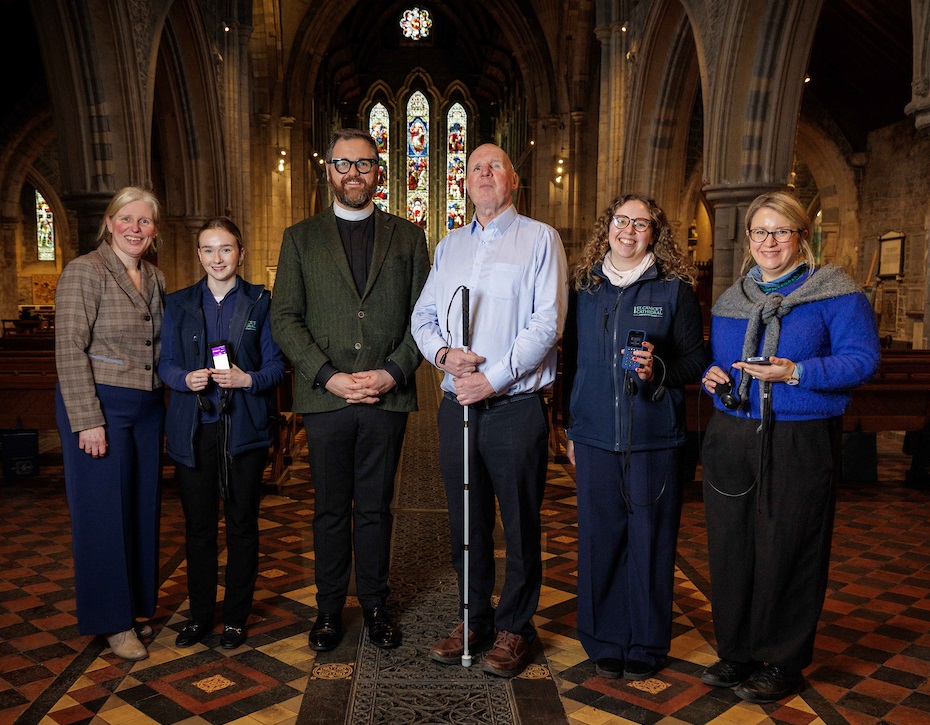
Both Tom Kennedy and Dean Farrell spoke to KCLR News at the launch.