
A documentary capturing the experiences of a Carlow-based aphasia support group will be screened at the VISUAL Arts Centre on Sunday, April 26th.
The film will feature the 12 members of ‘Talking Heads’, each of whom is living with aphasia, an acquired language disorder which affects approximately a third of all stroke survivors.
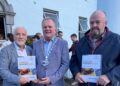
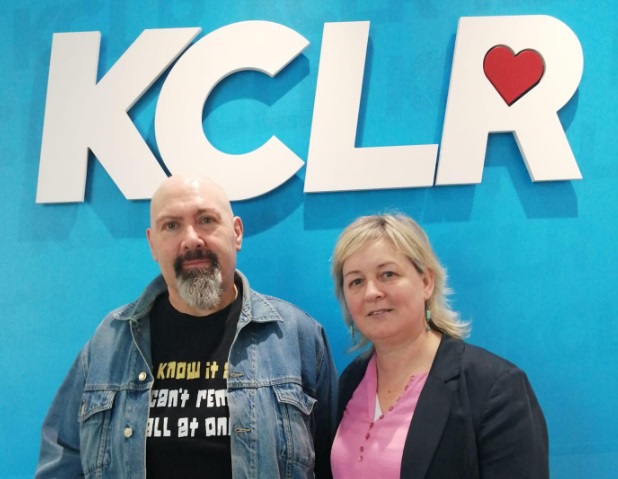
Joined by his wife and group co-founder Trish Doyle, Paul Flinter – who is living with aphasia having suffered a stroke in 2022 – fielded questions from Carlow County Councillors during their February meeting at County Hall.
In March 2024, Trish and Paul spoke to The KCLR Daily about establishing the group:
New group for people with aphasia to be launched in Carlow
They were joined at yesterday’s meeting by Sharon O’Neill and Sarah Kavanagh of Acquired Brain Injury Ireland (ABII), who told Councillors about the level of neurorehabilitation and information services ABII currently provides in both Carlow and Kilkenny.
ABII operates a clinical neurorehabilitation team and also provides residential rehabilitation, transitional living, day services, home and community rehab as well as case management across the country.
Limited resources
The limitations imposed by the resources at ABII’s local disposal were made plain to Councillors, several of whom shared their exasperation at the organisation’s current level of funding.
At present, ABII doesn’t operate residential services in Carlow and Kilkenny, with the nearest such services being in Wexford and Waterford. Case management services are not available locally either due to “extremely limited resources” according to Sarah Kavanagh.
ABII runs a Home and Community Rehab service locally which enables people to regain and retain independent living following a brain injury, with a Tullow-based client comparing her Occupational Therapist (OT) to “the cavalry arriving”.
Ms Kavanagh told the meeting: “Our services are so underfunded locally but nationally as well…Intellectual disability services get huge amounts of money and rightly so but when it comes to brain injury (care and rehab organisations) we do tend to get forgotten about. It’s a more hidden disability, it’s not as visible in the community, people aren’t as aware of it so we simply don’t get the funding that other disability services do and it’s so desperately needed.
“We can transform people’s lives.”
“That’s why we’re here today: to highlight that you can advocate for people’s rights to rehab and their need for services and if you can do that in any way, that would be greatly appreciated by all people (with brain injuries) living in the area and family members of people living with brain injury…If we had proper (financial) supports, it would be phenomenal. We could support so many more people and transform their lives.”
Sarah Kavanagh shared some significant figures at the February meeting. Stroke is the primary cause of brain injury (39%) followed by Road Traffic Accidents (RTAs) and falls (both 14%). The majority of those who suffer brain injuries are male (69%) with females accounting for the remaining 31%.
Annually, 19,000 new brain injuries are recorded in Ireland, which breaks down as 52 daily cases and it is estimated that 120,000 people currently living in the State with a disability following a brain injury, many of which are hidden.
Ten thousand (10,000) of these annual cases lead to hospitalisation. Meanwhile, some 8,500 new strokes and 300 new brain tumours are recorded annually.
Sharon O’Neill said that ABII “has no funded clinical supports” locally while there was “some limited access to psychology supports funded from other regions – robbing Peter to pay Paul, I suppose – and some limited access to OT supports through the HSE.”
One-on-one support
Ten people in Carlow and Kilkenny (five in either county) are currently receiving one-on-one (1:1) support from ABII, facilitated through the development of individual rehabilitation plans.
A total of 43 people (23 in Carlow, 20 in Kilkenny) are currently receiving group rehab support (in four groups, two in both counties) via the Home and Community Service. This includes Talking Heads, which meets every second Friday (2-4pm) in The Cabin at The Old School House in Barrack Lane, Carlow (Eircode: R93 YW10).
Muinebheag-based Cllr Andy Gladney (SF), who referenced an illness which he is continuing to recover from, praised the efforts of both ABII and Talking Heads in promoting the reality of living with a brain injury. “You’re all amazing people. The country is awash with money and you shouldn’t have to be looking for funding the way that you are.”
Following the meeting, Paul and Trish spoke to KCLR News about the receptive hearing they had received from Carlow Councillors and how ‘Talking Heads’ has developed over the past two years.
To read more about Paul’s story, visit: Paul’s Story – Acquired Brain Injury Ireland