



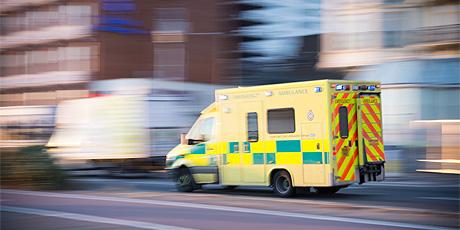
Major disruption could be caused to ambulance services across the country today with more than 2,000 workers going on strike.
The 24-hour action for members of the SIPTU and Unite trade unions began at 8am as a follow-on to yesterday’s work-to-rule in the pay dispute with the National Ambulance Service.
Further action’s planned over the next few weeks.
KCLR News understands pickets will be in place at key positions in Carlow and Kilkenny – our team’s due to speak with some of those involved so stay tuned for more and if you’ve something to add please text/whatsapp straight to studio: 083 306 96 96.
Minster of State at the Department of Health, Carlow Kilkenny TD Jennifer Murnane O’Connor in a statement to KCLR News says; “I want to assure our National Ambulance Staff that I appreciate the exceptional work that they do and the public service that they provide. Both the HSE and the Government accepts the need to increase and modernise pay arrangements for our staff working in the National Ambulance Service (NAS) and the HSE remains firmly committed to addressing the current dispute through the process set out in Public Service Agreement 2024 – 2026. I think mediation and talking is very important and I hope both side can engage through the State’s industrial relations mechanisms.”
The HSE says it has a contingency plan in place (more here).
Meanwhile, the Irish Patients Association has issued the following statement;
“The Irish Patients Association recognises the immense pressure ambulance personnel are working under and the increasingly advanced clinical responsibilities now carried within modern pre-hospital emergency care.
However, with major disruption to emergency response capacity now anticipated, the Association believes the situation has moved beyond a routine industrial relations dispute and into an area of legitimate patient-safety concern.
Patients must not be used as pawns by any party in an industrial dispute.
The public warnings issued by senior ambulance and emergency clinicians regarding delays, reduced response capacity and the possibility that some patients may need to make their own way to the hospital underline the seriousness of the current situation.
Emergency care is not an abstract service. For many patients and families, calling an ambulance represents one of the most frightening and vulnerable moments of their lives.
The advice now being issued to the public must also be communicated very carefully. One of the hidden risks during periods of emergency disruption is that vulnerable patients may begin second-guessing serious symptoms or delaying urgent care because they do not wish to burden the system.
The Irish Patients Association fully respects the State’s industrial relations mechanisms. However, history shows that where essential healthcare services and patient safety are at risk, intensified engagement and visible leadership have frequently accompanied formal industrial relations processes.
We are not calling for political interference in the outcome of negotiations. We are calling for every possible effort to help ensure the conditions exist for meaningful and urgent engagement before risks deepen further
If the system moves rapidly following a serious adverse event, patients and families are entitled to ask why every possible effort is not being intensified now while there is still time to reduce risk.
The protection of patients must now become the overriding priority for all involved, alongside urgent and meaningful engagement aimed at preventing further escalation and reducing risk to vulnerable patients”.