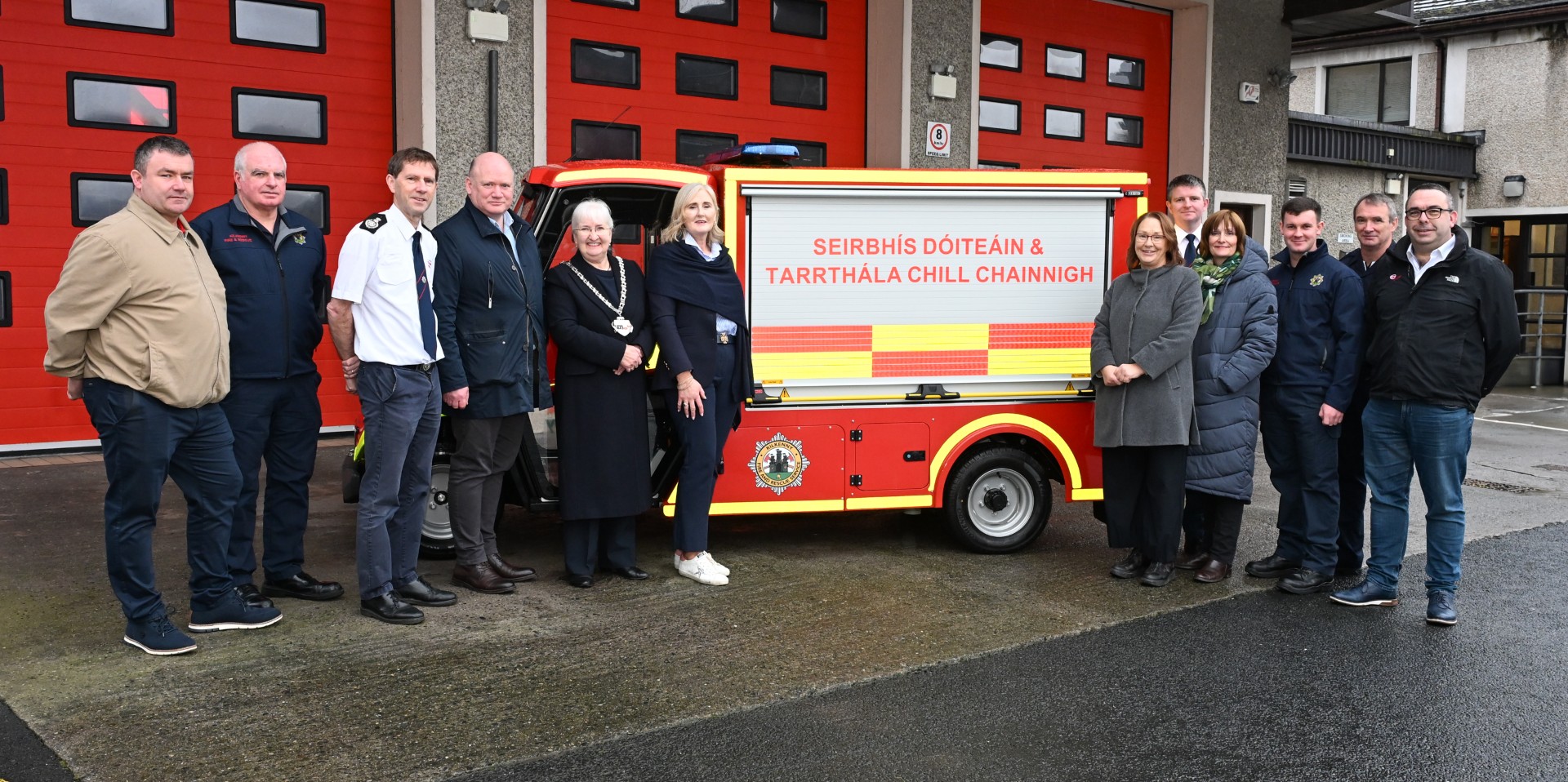



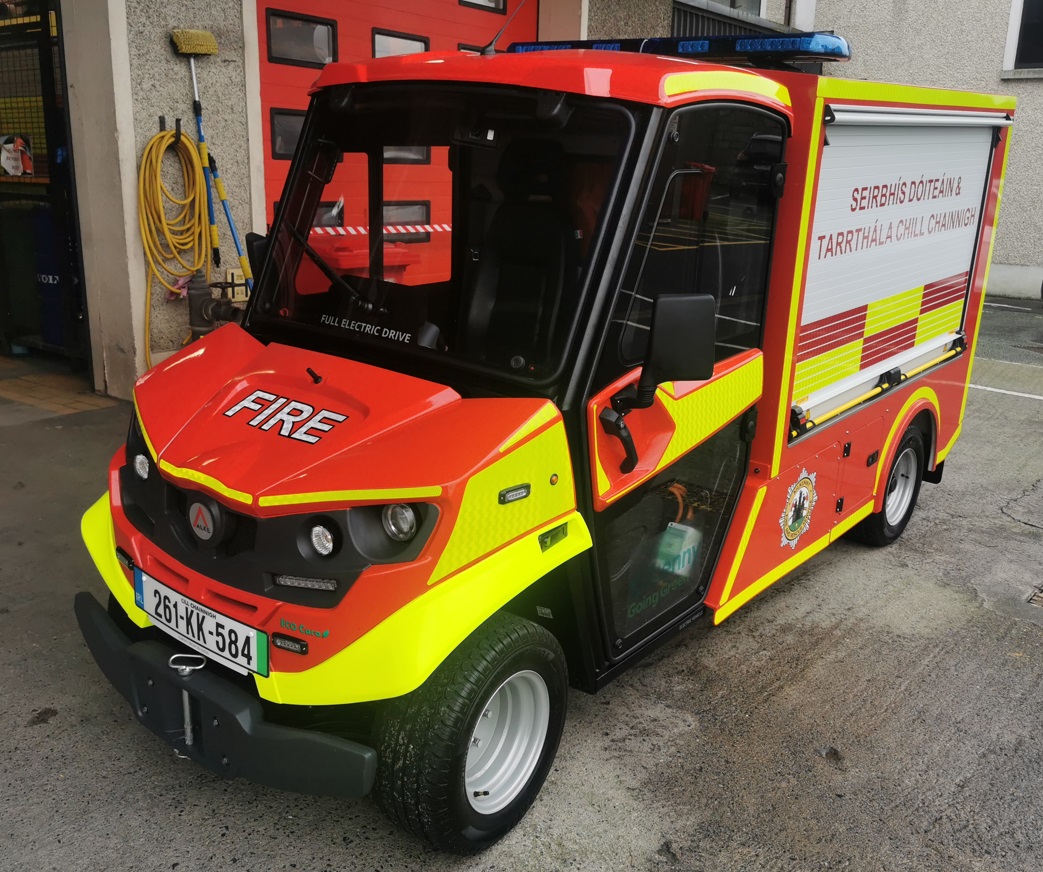
Kilkenny’s Fire Service has introduced the State’s first purpose-built electric fire appliance, a two-seat vehicle designed to specifically access many of Kilkenny’s medieval streets and laneways.
With an electric chassis supplied by Suirway in Carrick-on-Suir and the fit-out carried out by High Precision Motor Products in Tullow, the vehicle represents a first for Ireland from both design and operational purposes.
The vehicle carries 300 litres of water and features an HNE MFU 40/50 HiCAFS unit, which marks the first installation of such a Compressed Air Foam System in the country. This technology permits rapid, water‑efficient firefighting and is ideal for early intervention in confined and historic urban spaces, which Kilkenny city centre has no shortage of.
“This vehicle represents a major step forward for the Fire Service in Ireland,” said John Collins, Kilkenny Fire & Rescue Service’s Chief Fire Officer.
“As the first electric fire appliance of its kind, incorporating the first HiCAFS system of this specification in the country, it significantly strengthens our operational response in our medieval city while supporting our climate action commitments.”
The new vehicle supports national and local climate targets, including the Government’s Climate Action 2030 objectives and Kilkenny County Council’s Climate Action Plan, contributing to a reduction in CO₂ emissions without compromising frontline capability.
In addition to emergency response, the vehicle will support training, community engagement and public safety events. It’s likely that the new vehicle will be deployed at events across County Kilkenny in due course, including agricultural shows or major golfing events hosted at Mount Juliet.
“Kilkenny has always been a city that blends heritage with innovation,” said Kilkenny County Council Cathaoirleach Mary Hilda Kavanagh (FG).
“This new electric fire appliance reflects that tradition perfectly protecting our historic streets while embracing modern, sustainable technology. It is an important investment in public safety and climate responsibility.”
Funding of the vehicle was provided under the Capital Programme of the National Directorate for Fire and Emergency Management.